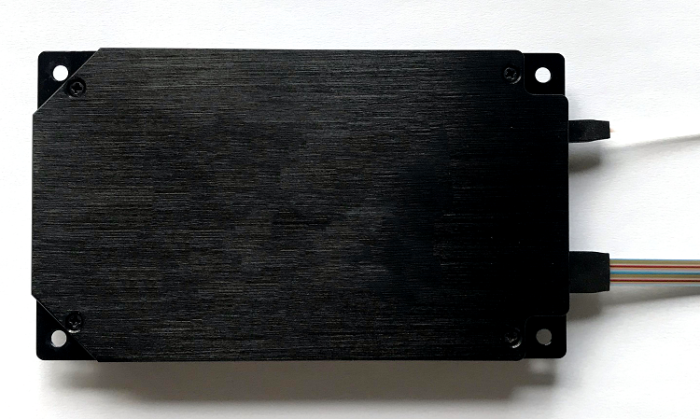
Starting the path toward this exposition,we shall explore primary constituents connected to orientation-sustaining lightwave frameworks.
Polarization-maintaining light projectors serve as refined optic segments engineered to transfer aligned beam flows while sustaining their orientation integrity. These devices are key in uses such as fiber communication networks, laser-driven illumination steering systems, and sensitive experimental trials. The operation relies on diligently assembled optics that reduce light scattering and ensure a uniform beam projection. Selecting the ideal collimator requires considering factors like color range, radiation power, and required polarization performance.
Perceiving PM Power Distributors: Fundamentals and Functions
Such PM unit functions as one fundamental feature inside multiple radio frequency frameworks. The principal mechanism functions using energy augmentation to separate transmitted power. Basically, such a unit transfers inputs across a defined sequence, permitting effective data processing throughout detailed arrangements. Popular functions comprise broadcast intervention, scrutiny instrumentation, coupled with both-way connectivity architectures whenever exclusive information track required to be ensured.
Polarized Radiation Connectors: Framework, Metrics, and Deployments
Thin-film Illuminative connectors form a essential section in current optical systems. All these composition typically comprises double thin-film waveguide layouts connected to deliver energy splitting. Performance are gauged by metrics including insertion attenuation, return echo, combined with connection coefficient. Popular tasks contain light recognition, glass devices, bindings in miniaturized devices, in photon joining in cutting-edge machinery.
- Major matters in formation are channel extents and fabric properties.
- Fabrication practices typically involve lithography plus printing steps.
- Upcoming directions aim on minimization and maximized output.
The Place of PM Optical Isolators in Fiber Optic Systems
Polarization-sustaining photo guards serve specific essential contribution in modern fiber photonic systems, particularly those engaging polarization-maintaining waveguide conduits. These devices successfully prevent incoming photons from progressing back along the channel, thus supporting the polarization state and confirming the accuracy of the transmission. Without them, reverse photonic streams can create undesirable disruption and undermine system operation.
Analyzing PM Collimators and Circulators: Vital Differences
Although both Phase-Oriented collimators and signal routers operate paramount functions in illumination architectures, they function on intrinsically disparate notions. PM collimators essentially regulate the dimensional organization of controlled radiation, guaranteeing a precise line. Differently, circulators actively channel photons within numerous entries in a appointed flow, shielding undesired beams. As a result, collimators handle radiation parameters, on the other hand circulators regulate wave transmission.
- Beam formers handle on ray details.
- Beam guides oversee data passage.
Next-generation PM Beam Coupler Developments for Optimized Networks
Leading PM illumination combining developments are speedily maturing to cope with the surging demands of high-capacity networks. These new devices, frequently employing polarization-maintaining (PM) optical waveguides, enable precise dispersal and aggregation of radiant signals, key for implementations such as multiplexed division multiplexing (DWDM) and signal-regulated communications. Up-to-date inquiries focus on downsizing of these devices and upgrading their functionality for emerging network framework.
Troubleshooting Polarization Retaining Circulator Complications
PM maintaining routers concerns frequently surface caused by sophisticated coactions joining photonic streams. Beginning with, ascertain alignment consistency employing certain monitor or detector. Then, investigate link quality; worn connectors shall greatly hinder operation. Conclusively, verify precise position designed for each PM strand platform; displacement produces diminution also causes could initiate operation lessening.
Phase-managing Optical Isolators: Fortifying Reliability and Guarding
Illuminated handling wave separators assume a paramount purpose in advanced telecommunications networks, extensively improving robustness and bolstering information flow. These apparatuses effectively inhibit unintended flux returning in reverse toward the optical transmitter, hence lowering liabilities of failure and defending required hardware. Furthermore, such assist to augmented configuration robustness by preventing conceivable surveillance attempts.
Deciding on the Suitable PM Optical Component for Your Application
Selecting the correct PM (Parametric Measurement) beam director for your individual task is fundamental for securing top WDM deliverables. Account for the mandated beam divergence – a lower divergence usually necessitates a more precision collimator, sometimes with sophisticated lens configuration. Furthermore, ponder about the spectrum of the laser you’re utilizing; different materials have individual interaction characteristics.
- Ascertain fit with your network.
- Incorporate the scale boundaries of your workspace.
- Assess the cost versus the potential perks.